

|
Getting your Trinity Audio player ready...
|
What Information Can Landlords Request for a Tenant Screening?
Tenant screening helps landlords protect their rental property, reduce the risk of bad rental outcomes, and consistently rent to qualified tenants. That said, many landlords get overwhelmed by the process – not sure what questions to ask, how to get the necessary reports, or what a legally compliant screening includes.
The good news is that screening doesn’t need to be hard for landlords or applicants. In this article, we’ll explain why screening is so important, talk about some key information to get, and highlight common mistakes to avoid.
Ready to start an easy, comprehensive, and legally compliant screening? All you need is an applicant’s name and address. Visit ezLandlordForms to start your next tenant screening.
Why Tenant Screening Matters?
Tenant screening is one of the most important things landlords do. Once you hand over the keys to a rental unit, your tenants have possession of the property.
There is so much you don’t know about applicants after just a tour, rental application form, or initial interview. Tenant screening lets you gather information about an applicant’s financial history, rental history, criminal history, and eviction history.
Tenant screening gives landlords a comprehensive look at an applicant and helps to:
- Reduce the risk of property damage
- Reduce the risk of evictions
- Reduce tenant turnover and turnover expenses
- Increase the likelihood that your new tenant complies with all lease terms
- Ensure you don’t accept applicants who will create safety risks for other tenants or neighbors
What Rental Information Is Commonly Requested?
One of the best ways to predict future behavior is to look at past behavior. That’s why rental history is so important during tenant screening.
Common rental history information that landlords request includes:
- Current address
- Previous address and/or all addresses for the past 5 years
- The dates the applicant lived at each address
- The monthly rent amount
- The name and contact information of the applicant’s two most recent landlords
- Reason for moving
- Whether or not there is a history of late payments
- Whether or not the applicant has any prior evictions
- Whether the applicant has documented lease violations and/or complaints
- Has the applicant been held responsible for damage beyond normal wear and tear
- Whether the applicant is current with rent payments
- Authorizations to contact prior landlords
It’s common for landlords to request this information in the Rental Application and then confirm the accuracy through credit reports, eviction history reports, and references.
What Employment and Income Information Can Landlords Request?
When selecting a new tenant, you want to see an applicant who has a steady income. To get proof of income to cover rent, landlords can request the following information:
- Whether the applicant has full-time employment, part-time employment, or is self-employed
- Employer name, address, and phone number
- Job title and position
- Start date of current position
- Name and contact information of supervisor
- Permission to contact the applicant’s employer
- Work schedule and expected hours
- Prior employment (for 3-5 years)
- Gross monthly income
- Income verification
It’s common for landlords to require income of 2.5 to 3.0 times the monthly rent amount. While landlords often use pay stubs, W-2s, and tax returns for proof of income, AI has led to a rise in fraudulent documents. Always verify documents by contacting the employer or including income verification as part of your tenant screening report.
How Credit, Criminal, and Eviction Checks Fit Into Tenant Screening
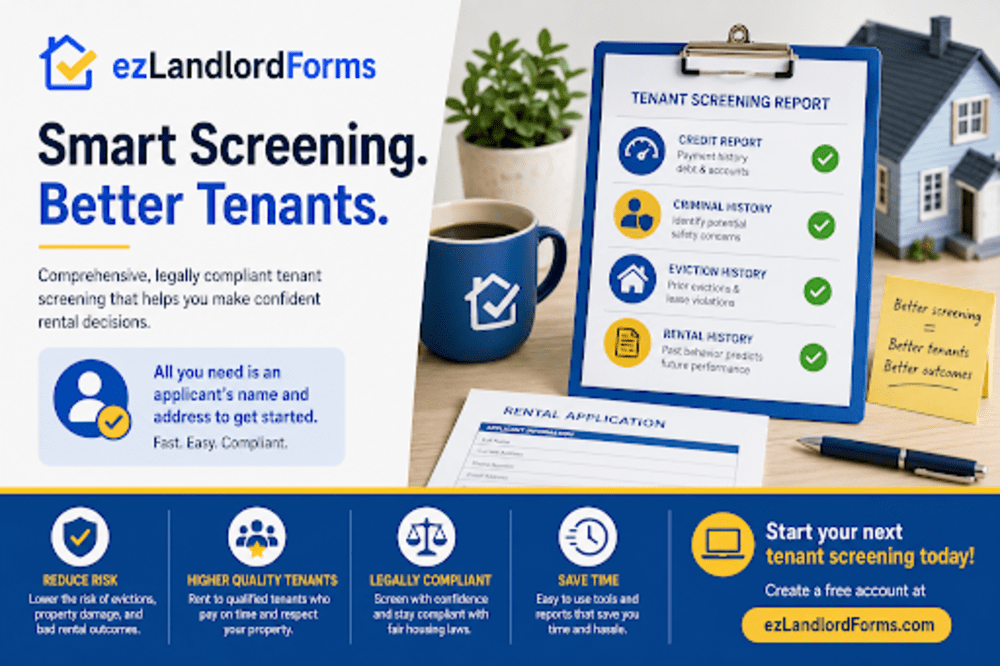
Credit, criminal, and eviction checks help give a complete picture of each applicant. Together, these reports help tell a full story about applicants.
The credit report gives a snapshot of financial history and habits. It gives information like payment history, debt, bankruptcies, and delinquent accounts.
The criminal history background report identifies criminal convictions that might create safety concerns or liability for landlords. Some states have restrictions on which portions of a criminal report landlords may use, so it’s vital to review applicable laws before making decisions based on criminal convictions.
The eviction history report identifies prior evictions, judgments for unpaid rent, and serious lease violations. These are key data points for landlords who want to avoid these bad rental outcomes.
What Questions Should Landlords Avoid During Tenant Screening?
During the screening process, landlords should avoid questions that appear to be discriminatory or that violate fair housing laws. Federal fair housing laws prohibit landlords from discriminating against applicants based on race, color, religion, sex, national origin, familial status, or disability.
Some states have state-specific fair housing laws that extend protections for sexual orientation, age, marital status, immigration status, certain criminal history convictions, and military status.
As a general rule, any questions asked should be connected to a legitimate business concern.
Common Mistakes to Avoid When Collecting Tenant Screening Information
Mistakes during screening can lead to accepting unqualified candidates, legal disputes, and violations of fair housing laws. Some of the most common mistakes that property owners should avoid are:
- Asking different questions to different applicants
- Vague or inconsistent screening criteria
- Not collecting enough information – for example, relying on a credit report alone
- Not verifying information on the rental application
- Not getting written consent to run screening reports
- Making the screening process complicated for applicants
- Not documenting the screening process
- Selecting a tenant too quickly without doing a complete screening
Explore Tenant Screening Tools, Rental Applications, and Landlord Resources
The best way to avoid bad rental outcomes is by only renting to qualified applicants. Effective tenant screening allows landlords to make informed decisions about applicants.
ezLandlordForms has comprehensive tenant screening services that make life easy for tenants and landlords. All you need is an applicant’s name and email address to send a screening request.
Create a free account today to send a screening request.
Emily Koelsch, ezLandlordForms Contributing Writer
 Emily Koelsch is a freelance writer and blogger, who primarily writes about business, real estate, and technology.
