
|
Getting your Trinity Audio player ready...
|
While homeowners insurance is adequate for a primary residence, rental properties carry higher risk and need more insurance coverage. For that reason, property owners need a strong landlord insurance policy whenever a property is occupied by tenants.
In this article, we’ll explain the differences between landlord insurance vs. homeowners insurance, discuss why making the switch matters, and answer some frequently asked questions about landlord insurance.
As a landlord, insurance is one part of a risk management strategy. The goal isn’t to eliminate all risks; it’s to build systems that help manage risks throughout every stage of the rental process. ezLandlordForms can help you put those systems in place with tenant screening services, legally compliant lease agreements, and state-specific notices. Create an account today to ensure your rental business is protected.
Do You Need to Change Insurance When a Home Becomes a Rental?
When you convert your property from an owner-occupied home to a tenant-occupied rental unit, you need to convert your insurance coverage from a homeowner’s policy to a landlord policy.
Homeowners insurance and landlord insurance are two distinct types of insurance policies with different coverage. Because rental properties have unique risks that owner-occupied properties do not, property owners need to update their insurance coverage whenever a property is used as a rental unit.
What Does Homeowners Insurance Cover?
Homeowners insurance policies are created specifically for owner-occupied properties. They cover the structure itself, the homeowner’s belongings, and include personal liability for the homeowner.
Key components of a standard homeowners insurance policy include coverage for:
- The home and all structures on the property
- The homeowner’s personal property
- Loss of use or temporary housing expenses
- Personal liability
What Landlord Insurance Covers
In contrast, landlord insurance is designed for a property owner who rents a residential unit to a tenant. Rental units include increased risks for landlords and insurers, and the policies are created to reflect this. Specifically, rental properties come with a higher risk of:
- Tenant or guest injuries
- Property damage caused by the tenant’s negligence
- Loss of rental income
- Damage or losses due to property vacancy
Rental property insurance policies usually cover:
- Dwellings and structures
- Landlord-owned property, like appliances and fixtures
- Landlord liability for injury of tenants or their guests
- Loss of rent coverage or fair rental value coverage
- Legal defense for covered claims
- Medical payments for minor injuries
*Rental property insurance does not cover a tenant’s personal belongings.
DP-1 vs. DP-2 vs. DP-3 Landlord Insurance Policies 3
When shopping for landlord insurance, you’ll see lots of form names thrown around. These can seem complicated, but really aren’t. The three most common forms are DP-1, DP-2, and DP-3. These are types of policies designed for residential units, and they’re generally used for rental properties.
Here’s a snapshot of what these dwelling property forms cover:
- DP-1: This is the most basic form. It only covers “named perils.” This means it specifically states the perils that it covers. If a type of loss is not listed in the policy, it’s not covered. A typical DP-1 policy covers losses due to fire, lightning, windstorm, hail, internal explosion, or smoke. DP-1 policies usually only compensate owners for the cash value of a loss rather than the replacement value.
- DP-2: This is also named-peril coverage, but it includes broader coverage than a DP-1 policy and usually reimburses policyholders for the replacement value rather than the cash value of a loss. A typical DP-2 policy extends the coverage of a DP-1 form to losses from snow and ice, falling objects, burst pipes, or sudden electrical damage.
- DP-3: This is the broadest of the policies and is “open-peril” coverage. This means that a loss is covered unless it’s specifically excluded. These policies usually do not cover losses due to earthquakes, floods, neglect, or intentional conduct.
Note: There are similar forms for homeowner’s insurance, referred to as an HO-1, HO-2, and HO-3.
Landlord insurance policies are often marketed under different names, including rental property insurance, investment property insurance, and rental dwelling insurance. These policies usually include one of the primary policy forms discussed above plus additional coverage and endorsements for things like landlord liability, loss of rent, or vacancy provisions.
Each insurer has different terms and provisions, so it’s important to review the terms of your policy to understand what’s covered.
Side-by-Side Comparison: Landlord Insurance vs. Homeowners Insurance
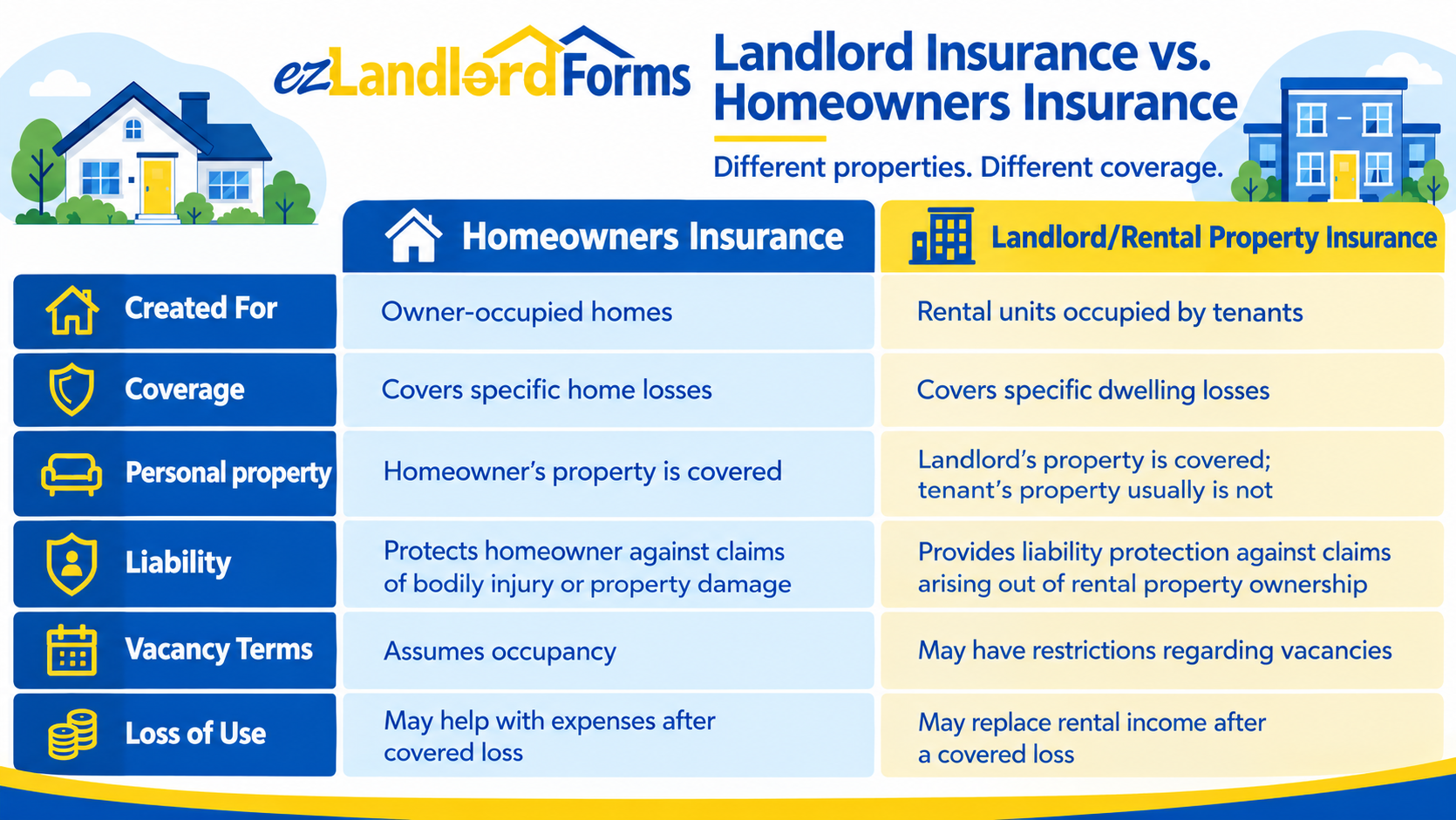
To understand the difference between policies, it’s helpful to do a snapshot comparison of landlord insurance vs. homeowners insurance. Here are some key features of each product:
How Much Does Landlord Insurance Cost Compared to Homeowners Insurance?
Landlord insurance is generally more expensive for the same property than homeowners insurance. While prices vary based on the location, property, and insurer, landlord insurance is generally 15% to 30% more expensive due to the increased risk that rental properties pose.
The additional risks and expenses that come with landlord insurance include:
- An increased risk of loss due to tenant occupancy. Tenants aren’t as familiar with the property as owners are and are not as invested in taking care of it.
- Increased liability expenses for property owners.
- Coverage for lost rental income, which can be a significant added expense.
- Periods of vacancy, which is a riskier occupancy pattern than owner-occupied properties have.
What Happens If You Use Homeowners Insurance on a Rental Property?
Property owners who convert a property to a rental but don’t change their insurance risk significant financial and legal exposure. Failure to convert to a landlord policy can result in:
- The policy being canceled
- Claims being denied
- Not having liability coverage
The consequences will depend on the situation and the terms of the policy. There’s a key distinction between forgetting to convert to landlord insurance and knowingly providing false information to get a less-expensive homeowner’s policy. Property owners who knowingly have homeowners insurance on a rental property can face claims of fraud or policy rescission.
To ensure you and your property are protected, you should always:
- Alert your insurance company if you convert your primary residence to a rental property.
- Switch your insurance policy from homeowners insurance to landlord insurance.
Landlord Insurance vs. Homeowners Insurance FAQs
What Is the Difference Between Landlord Insurance and Homeowners Insurance?
Landlord insurance is designed for property owners who rent out their units, while homeowners insurance is designed for owner occupants. Landlord insurance policies are created to provide insurance for the dwelling plus additional coverage that landlords need, including liability coverage and loss of rental income. Homeowners insurance covers your home, structures and the risks associated with occupying your home.
How Much Does Landlord Insurance Cost Compared to Homeowners Insurance?
Landlord insurance is generally more expensive than homeowners insurance because rental properties create increased risks for insurers. While the exact price difference varies based on location, type of property, insurance company, and policy terms, landlord insurance is generally between 15% and 30% more expensive than homeowners insurance.
Does Landlord Insurance Cover Lost Rent?
Most landlord insurance policies cover loss of rent due to a covered loss. For example, if there is a fire at your property and it becomes uninhabitable, your policy would likely compensate you for lost rental income.
Landlord insurance usually does not cover loss of rent if a tenant stops paying rent, breaks the lease, or there’s a vacancy between tenants.
Does My Landlord Insurance Cover My Tenant’s Belongings?
No, most landlord insurance policies only cover personal property belonging to the landlord, like appliances and fixtures. Tenant property is generally not covered. Landlords should make sure tenants understand this at the start of the tenancy and encourage tenants to get renters insurance to protect their personal property.
What Is a DP-3 Policy and How Does It Compare to an HO-3?
DP-3 and HO-3 are both insurance forms, but the DP-3 is generally used for rental properties while the HO-3 is used for owner-occupied properties. Both forms are open-peril policies, but the specific terms of DP-3 and HO-3 forms can vary from one provider to the next.
Do I Still Need Flood Insurance on a Rental Property?
If your rental property is in a flood zone or an area at-risk for flooding, you likely need a separate flood insurance policy. Most DP-3 or landlord policies do not include flood coverage.
Do I Need Landlord Insurance?
If you’re renting out a home or using a property as an investment property, you need landlord insurance. Homeowner insurance is intended for owner-occupied properties and should not be used for rental properties.
Key Takeaways for Landlords About Landlord Insurance vs. Homeowners Insurance
Landlord insurance is a key way that landlords manage risks and protect their investment. It’s a good practice to annually review your landlord insurance policies to ensure you have the coverage you need. You can always contact your insurance company with questions or to request additional coverage.
Being proactive about risk management ensures you’re ready for whatever issues arise, and insurance is only one part of good risk management systems. The most successful landlords utilize tenant screening, the lease agreement, rental insurance requirements, security deposits, and ongoing maintenance to reduce the risk of loss and protect their rental business.
